Sunday, August 24, 2014

Granfondo Cannondale Les 2 Alpes 2014–Ketosis Experiment

The Granfondo course is the last in a summer series of monster races that include the Marmotte. This course is 167 km long with 4100 m of climbing. For the last few years I've not felt up to this sort of challenge - largely due to feeling that it is too demanding. These races are in the heart of the Alps in very rugged terrain with long and sometimes very steep climbs over many hours. Every tactic I'd tried in the past more or less failed and I ended up plodding around in relative discomfort and only took satisfaction from finishing - usually in a certain amount of distress and unable to breathe properly. They always finish at high altitude with a large proportion of climbing at towards the end. More "user friendly" races try to have a 20km descent and plateau at the end so that you can get some oxygen into your brain and enjoy the finish at least.  I might add however that even just the satisfaction of finishing is great - but not quite great enough to encourage a return on a regular basis. This series of races however is marketed heavily in Holland and Germany to a very keen set of club racing enthusiasts - and the Dutch being completely deprived of hills are are more than enthusiastic, turning races like this practically into a religion... if only religion was as friendly and civilized! Perhaps it's because hard cycling is such a great leveller and relates to the great outdoors that it's an infinitely more valuable and human way to spend a Sunday than being brainwashed in a church. Unlike the Marmotte which has several thousand entrants the full length Granfondo would be lucky to reach 200! (in fact it ended up with only 183). The other race in the Alps close to this category is called the Vaujany - and it's early in the season - likewise limited to a few hundred entrants – but not quite a “Granfondo”. Personally I don’t like those massive events like the Marmotte and the Etape du Tour - which are extremely commercialised. The excessive number of participants is just unnatural and disturbing. Sure there's no chance of being isolated - but there is a serious chance of bicycle traffic jams and claustrophobia even in a location where agoraphobia is normally the rule. You can also be sure at those massive events of the gigantic fleet of busses and articulated trucks coming up the rear to collect the thousands of abandons! The Vaujany and Granfondo races are just the right size so that they become "personal" - but this is also intimidating because there is a certain level of both confidence and ability required - so they are perhaps not for the person who might take 12 hours to get around isolated on their own followed closely by the famous "voiture balai" (sweeper up van).

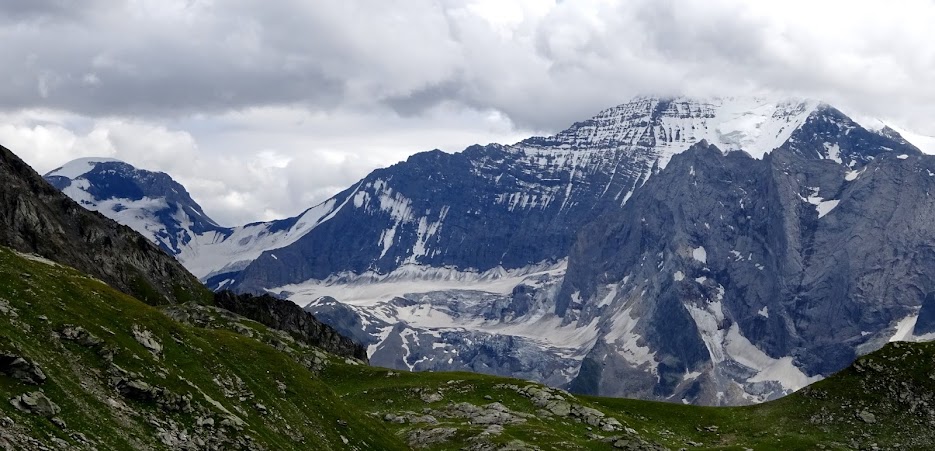
Mont Pourri (Savoie) – no photos yet from Les 2 Alpes so I took this from the balcony this morning at home.

Preparation

My entry for this race was very last minute. Still recovering from the Tour de l'Ain exploit the previous Saturday I was initially in no mood for a return to such extreme events as the Granfondo. Chris Harrop set the ball rolling with the suggestion, but when eventually I made the decision to go for it he had already backed out due to family pressures. Once you decide on things like this though you start to become motivated so there is no going back. The weather would be fine - no rain - so no obstacles. The massive descents and high altitude would not be sensible in cold, wet weather. It turned out that I was too late to register online so would have to do so in Les Deux (2) Aples on the Saturday afternoon before the Sunday race. Despite starting preparations early on Friday evening - sorting out the bike and every little thing imaginable - I still managed to leave for Les 2 Alpes the next day without a jacket or fleece and without a pillow or my overnight battery charger for the telephone - which is used for feedback and recording during the race. The intention was to sleep in the estate car. The most important thing I did remember however was to print out my medical certificate - without which entrance would be refused. The bike was cleaned up, checking for any problems. The chain was relatively clean so only needed a wipe and re-oiling with ceramic oil and the rear tyre needed to be swapped for a fresh - still "round" - one for the race. Food and supplements for the actual race had to be prepared and then bedding and cooking stuff, plus food for the "car camping" - including water and coffee etc. Cleaning gear for the morning and a million and one details have to be sorted out. Just one thing left at home can cause a big disruption. Part of my "fog" during preparation was due to the added complication of having spent the entire week in a "ketosis" diet - with no carbs! Not that the low carb effect was causing a fog - just that it was much more to think about and uncertainty was generating indecision.

Ketosis - No Carbs!

Granfondo races are a big enough challenge - as I well know from miserable experiences in the past. Having started the summer discovering the incredible benefits of fasting I'd now moved on to a full "ketosis" diet - where the effects of fasting could be maintained even without caloric constraints. Currently though I manage a 12 hr daily intermittent fast and also one period of 36 hr fasting each week. Endurance exercise also generates “post exercise ketosis” and only a few days before the race I’d done a 22 km run – fasting straight afterwards. The race and the ketosis were now meeting each other in a head-on clash. What should I do? Abandon the diet or risk abandoning during the race? With complete indecision at this stage I prepared food for returning to pre-race carbohydrate loading and also for remaining carb-free. Perhaps it was during the drive to Les 2 Alpes that the decision was made. I was going to attempt this race with the body as empty of carbs as possible at the start. The only reason for not putting this to the test would be a combination of fear and ego - but also perhaps because it is such a radical departure from "conventional wisdom". There is always intense but invisible, unconscious pressure to conform – even despite good scientists overtly disagreeing with this conventional wisdom.

When the body has been working hard for about 2 hours then it incurs a carbohydrate debt - below normal levels – and that allows you to replace the carbs without impairing the fat burning metabolism. My strategy would be to go into the race with no significant carbs having been eaten all week and then after 2 hours into the race to start supplementing with carbs. The recommended approach is to eat salty Cashew nuts. When the body is in ketosis the kidneys excrete more salt so more salt needs to be eaten. Cashew nuts provide many nutrients and a slow release of carbs - so I prepared about one pound of nuts to carry in the race. In addition I prepared two flasks of 180g (dry weight) of maltodextrin/fructose mix - so that I'd have the option of going heavily on carbs if necessary. The maltodextrin is actually recommended by Dr Peter Attia - one of the best Keto experts around currently. This would mean carrying a lot of stuff but as I'd already lost 24.5 lb in weight this summer that wasn't too worrying.

Capture

Les 2 Alpes

The trip to Les 2 Alpes only took 2hrs 30 minutes and registration was fast and simple. There was a surprise "gift" from Cannondale of a tiny but very neat pressure control valve and two CO2 canisters - for tyre inflation. I had bought food down in the valley to cook for the evening meal and breakfast - to use coconut oil for a direct supply of ketones and to avoid restaurant food that is packed with cheap carbs. First thing I noticed however when arriving was how chilly it was even in the sun - which is when I realised my warm clothing was left at home. End of season summer sales are everywhere just now so I managed to pick up a decent fleece for 10 euros. Fortunately I'd put a windproof polar cycling top in my bag too and it was sober enough to wear as normal clothing over the fleece later on. In town there was a small coffee shop with pure Arabica organic coffee and a quiet atmosphere - so I could hang out there for a while when the sun went down.

My only problem in Les 2 Alpes was that the car lock failed - for the second time. I had to remove the rear driver side window panel to get in. Fortunately I keep this panel a thin transparent plastic for exactly this sort of problem - breaking the original window after a complete locking system lockdown three years ago. This time a penknife was used to prise the rubber and remove the window in minutes without damage. Peugeot doors and locks are seriously rubbish.

For eating I'd need to find a place to cook so drove to the far end of town - which terminates in a cliff which can be used for paragliding take-off. Here there was some green space and practically nobody - just a bench and table that could be used in privacy for preparing a high fat meal and eating it without any hassle. This is also where I'd return for parking up for the night and sleeping - just to escape the lights and noise in the town - which actually has an incredible amount of parking available on almost every street. Les 2 Alpes is very "parking friendly" and this is so smart compared with the hostile imbeciles who pretend to run Val d'Isère and Tignes. This resort is absolutely buzzing in the summer and there is a massive mushrooming mountain-bike culture. The coolest thing I saw however was a lady on a skateboard being pulled by her dog. The dog was really into it and each time she slowed down a bit it would take up the strain and go for it. If I ever get a dog I'll need to take up skateboarding.

The missing pillow was sorted out by using an extra sleeping bag rolled up - with half of it spread over the inflatable mattress and the other half rolled up under the head. It was perfect. The tiny Mammut mattress is absolutely excellent for comfort. You can pay a fortune for a stupid hotel but will never find a mattress as comfortable as this. Pushing the passenger seat forwards gives me more than a fully extended body length for stretching out. Yes! Sometimes it pays in life to be short!  The bike, fully prepared for the course with numbers, electronic timing chip and extra battery for the telephone all attached had the wheels removed and was placed across the front seats. About 20 minutes into trying to get to sleep there was a visit from the Municipal police to put a notice on the car windscreen to say that parking was prohibited there between 10pm and 7am. They didn't bother me though. Looking out of the window while lying there the stars were filling the sky and were properly visible thanks to being away from the glare of the town. Almost immediately a meteor shot out of the central area. A few minutes later there was a bight flash in the same area - just a point of light this time - as if a meteor was coming straight towards me. First time I've ever seen that before. 10 minutes later it happened again and then again but further east and then again even further east but this time with a very small trail. It was definitely interesting to watch but not helping me get to sleep. Eventually sleep came and seemingly instantly afterwards so did the alarm clock for 6:30am. I knew that even this early would leave a minimal time to get ready for the 8am race start – which is why I eventually got there with 2 minutes to spare. Coffee, cooked breakfast with loads of coconut oil, everything packed up in the car, all the cycling gear worn under warm clothing and all the cycling bits a pieces sorted out, telephone put on charge from the car and the bike prepared and then slid into the back - and it was off in the car and into town, parking close to the amazing fully automatic public toilets - an essential element for any last minute duties before a race.

Somehow my brain fog was clearing and I didn't forget anything. Last week I'd forgotten to put water in my bottles - this time I had magnesium and salt rich gassy (CO2) mineral water in both. To deal with the cold I'd put on thicker socks and a base layer beneath the jersey, with warm removable sleeves and a full thin “water-resistant” windbreaker layer on the outside. The electronic timing chip was beneath the saddle and a number on the handlebars for the photographers - but no jersey numbers - which is good if you have to wear a jacket. At the start however it was surprising at how few the participants were - perhaps even fewer than on the Tour de l'Ain the week previously. That's not a lot of people for such an internationally promoted event. It’s also pretty scary when you realise how long the course is and how spread out people can become over 100 miles of mountains when you need partners to help work against headwinds and long rolling sections to have any hope of a good time.

Race Start

The evening had been cold – except when sleeping because the down summer sleeping bag was too warm – and this coldness persisted outside in the morning. The start of the race would be a long descent all the way down the valley from 1650m altitude to 720m altitude at La Paute - 3km  beyond Bourg d’Oisans. With temperatures around 6°C this was going to have a real effect. I’m generally not good at getting going in the cold. The start would be neutralised until Freny d’Oisans at km 11 – with a reassembling of everyone together before the official timing start. I set my own clock from the very start in Les 2 Alpes because it was my personal goal to complete the entire 167 km circuit in under 8 hours and the KM markers on the planning were related to the this location. Anything under 8 hours would make me happy!

Prior to the start I was very apprehensive  because not only were we dealing with the cold but I’d committed to remaining carb free all the way until at least 2 hours into the race. This was scary because if it didn’t work I could end up in a real mess with complete exhaustion and a lot of discomfort. I’d read contradictory reports of some people suffering terrible cramps and performance losses when this approach hadn’t worked for them – so anything was possible. The coconut oil in the morning was to supply pure ketones direct to the brain – in substitution for glucose. Hopefully my body was now fabricating its own ketones by now – but I currently have no equipment for measuring that (cheap semiconductor based alcohol breath testers can measure acetone in the breath so I have one ordered from China for 9 euros!). The problem is that during keto-adaptation – which takes a minimum of 3 weeks – the muscles themselves don’t get much of the ketones supplied to them as they are reserved to keep the brain working. My feeling was that even the modest level of physical training I had was enough to ensure that I was at least burning fat to a reasonable degree so that should keep the muscles going and any ketones that I made should be probably enough to keep the brain running and avoid bonking. Ketones are a by-product of fat burning and can directly replace glucose in the brain and it is the preferred fuel for the heart. It’s a mistake to accept the common “official” view that the brain is dependent on carbs for fuel – it simply is not.

When we arrived at the dam junction, still a few miles from the official start, the control car had to stop to let traffic through and a white van charged up the outside right up to the junction. This idiot was trying to overtake the entire mass of cyclists, dozens of security motorbikes, ambulances and security vehicles! One French cyclist was chasing it because he must have had a close shave and he was yelling at the people in the vehicle and slapped it hard when he caught up. Out of the vehicle stepped a hysteric French girl and she started screaming and pushing the cyclist – forcing him to defend himself. This led on the silly boyfriend who was also in the vehicle and he came out with fists flying all over the place. It developed into a real fight. At least one cyclist had his bike damaged. Personally I felt the van people should have been arrested and locked up. However, we all went on out ways after security intervened. I forgot to stop my clock so about 5 minutes needs to come off the overall time for that incident alone. Before we got to Freny and the start I was shaking on the bike from cold during the descent. While waiting at Freny some people were shivering violently – depending much on how much they were wearing.

From the actual start there was a climb of 150m in altitude which sorted out the shivering but it would be 5 hours into the race before my feet stopped feeling cold. This climb told me that my legs did not feel great. Was it the cold or the ketosis? I could maintain a reasonable pace but not go fast. In a way that’s not too bad because I always make the error of pushing too hard at the start and ending up in a group that is too fast – wearing me out prematurely. I’d noticed when running three days earlier (22km run) that the ketosis made the start of exercise seem sluggish – probably because that’s when the body tends to be heavily into carb metabolism. After about a half an  hour to forty minutes when the body has warmed up and then fat burning works well. This is probably why pros warm up for 40 minutes before a time trail. In contrast we had been descending and freezing so I think I collected all the negatives in one basket. Mentally I just wasn't into it either – probably due to cold and poorly adapted ketosis together again.

I used my descending skills to catch up a bit before reaching the valley floor and so fell in behind a fairly strong rider for drafting along the 7 km valley plateau into a slight headwind. Three of us did rotations on the front and this was a good place to test the legs. It was hard getting the legs to cooperate but they still functioned. It was only when reaching the turn off at La Paute up to the first climb that I realised we we pulling along a peloton of 17 in total. All my references to subjective feelings are null and void with this developing ketosis experience. It’s impossible to judge subjectively which is why measuring it in competition is so important.

Hitting the bottom of the climb the entire peloton passed me. I’m quite used to that even though it didn’t happen last week. The cold legs and glucose starvation left me very unsurprised as I watched the peloton disappear into the distance. This was just the start of a 10km climb – the first of many. Needless to say I felt slightly worried and demoralised at this point and not at all buzzing as I’d been the week before at Ain when pumped full of carbs.

Climb 1

The first proper climb was 10km to the Col d’Ornon. I’ve always been terrible at transitions between flat rolling terrain and hills. I have no idea why this is the case but it is clear and obvious. Two young Germans had taken the lead of the peloton in the climb. They were very pro looking with well developed thighs and very slick looking altogether. One other fit looking guy had the head of a lion roaring tattooed on his left calf muscle. Other than Bradley Wiggins’s recent horrible arm tattoos you don’t see many people silly enough to make this sort of blunder. Anyway it makes it easier to recognise people so it can be useful.

The climb progressed and the peloton fractured into bits up ahead with the Germans and Lion leg disappearing out of sight eventually. My heart rate was sitting around 154 bpm so there wasn’t much that could be done to change the situation. Something strange then happened. We were now around one hour into the official race and with about 2 km left of this first climb. I suddenly started to feel different, the head clearing and legs working. Over this 2 km I went form being dumped by the entire peloton to catching up even those who had previously vanished out of sight and ended up leading the group again by the top of the col. It appears that the fat burning metabolism had started to kick in properly. Not being properly keto-adapted it was inevitable that I might have to wait for this to happen.

There would be a very long descent and rolling flats ahead so I let the two German “pros” take the lead and do the work – which they seemed very happy about. This is very stunning countryside and national park (Ecrins) area so by drafting there was enough time and energy to allow a bit of looking around – though not much as attention has to be kept on the other cyclists for safety. We continued like this heading generally South West until km 53.4 at Les Angelas. This would mark the start of what was easily the hardest climb of the day.

Climb 2

Right at the bottom of the climb up the Col du Parquetout I was once again overhauled by an invisible peloton that had been hiding right behind me – this time the 17 had been reduced to 14. The problem now was that the start of this climb was a 4 km stretch of between 11% to 15% gradient – and my gearing was far from ideal. The small 36T oval chain ring is just too hard at this gradient – even with a 28T cog on the rear. Perhaps it’s the “oval” making the push phase more like a 38T. I was wishing for my old 34T circular chain ring back again. Predictably everyone disappeared ahead and though I struggled with the gearing the gaps didn’t grow too much. It was very demoralising though and at times I had an internal voice suggesting to me that I should really stop. When the head goes into this dark area it’s not nice. Eventually, despite all of that we popped out at the summit to find a ravitaillement (drinks supply) stall where water bottles could be refilled. There were no feeding stations yet – just water supply. More than a few were probably annoyed about this but it was marked so on the planning. Lo and behold the Germans were just ahead getting their bottles filled – so I hadn’t lost any significant time. One minute’s stop to take on water was enough to chill the sweat soaked body for the next descent. When I set off to chase after the Germans (who were gone already) the reality of how tired that climb had left the legs suddenly set in. There was no force there to be used. We were now 2 hours into the race and it seemed that it might be game over for this little experiment already. The mental and physical clarity that had appeared on the first climb had more or less vanished by now. Remembering the plan to eat carbs from the 2hr mark I just got out the flask and swallowed the first carbs of any sort for over a week. The rest itself during the start of the descent was actually enough to surprisingly bring the legs back – so instead of giving up I went on the attack – reeling in the Germans and a good handful of others right at the bottom of the descent – just in time for a short climb and then a long plateau where the advantage of drafting and being in a group was necessary. So far so good. The next real climb would commence at km 77.6 and I was still in the race. Last week when heavily on the carbs I was already done by km 69! (In fact I’d last until  km 86 today on the Col de la Morte – appropriately named!) Around about now though the reality of the immense amount of climbing still ahead was beginning to sink in and thoughts started wandering towards devising a “plan b”. After considering abandoning and hitching a lift or waiting for the “voiture balai” I eventually decided that this was silly as this thinking was mostly based on fear and I could always slow down and plod to the end enjoying scenery if necessary. I was still fully covered with the wind breaker and cold feet so perhaps morale was just a bit low. The task ahead did seem daunting though.

Climb 3

The next climb (a series of two) began at Sevioz km 77.6. Just before reaching this turn off most of our original peloton had regrouped but about 30 seconds before arriving at the turn off I saw another peloton numbering about 20 already at the turn off. We must have gained a good bit of time on the last section but  unfortunately we never actually caught them. This is in fact where it all started to fall apart. The shorter part of the climb was about 6.5 km then followed by a short descent and another 12 km climbing up to the Col de la Mort. The Col de la Morte (Pass of Death!) has been likened to a mini Alpe d'Huez with numerous switchbacks up to the ski resort of Alpe de Grande Serre. However, on the first climb the slightly heavier set German very surprisingly started to crack. His friend went ahead but as we reached the short descent and plateau I waited for a moment to see if he could draft me into what was now a strong headwind. He was going through a bad moment because he didn’t make it. This meant that the entire plateau had to be traversed solo against an intense headwind. Close to the end of the plateau I saw a shadow of someone behind me and it was the German who had recovered and caught up – probably some time back. He was drafting me against the headwind and as a result was able to pull ahead slowly on reaching the actual climb up to the Col de la Morte. Now I was getting tired and about 5 others overtook me on this climb. This is about the point where my morale was at it’s lowest and thoughts of not finishing were quite persistent. Fighting not only uphill but against a powerful gale funnelling head on down the valley was not, according to my still cold and tired legs, any idea of fun. The important thing was to push on as best as possible. There was a proper feeding ravitaillement at the the top of this climb and right there were the two Germans again – the faster one having waited for his friend. I dismounted the bike properly this time and had some Coke to drink, just a little banana and a date but very little else. After stopping for a pee and then topping up on water I was off but now quite happy to just let the two Germans go.  It was now an extremely fast 1000 vertical metre descent down to 376m at Séchilienne- km 113.5. The difference in temperature as it warmed up during the descent was extremely welcome as my feet had been cold for almost 5 hours now since leaving Les 2 Alpes.

Climb 4

Right at the bottom of this descent, when taking up pressure on the pedals, I got my regular as clockwork “5th hour” cramp welling up on the inside of the right leg. I tried shaking it loose but this time it got me –though only for a moment and then with light pedalling it died away. Lucky! Now – also very lucky – that strong valley wind was coming from behind so it didn’t really matter being isolated. In fact it was really enjoyable being able to set my own pace and just feel the wind pushing gently from behind and warming up the body. We were set for a long 14 km climb on the main road – likely to be a solo time trial and then another 7 km on a faux plat up to the base of Alpe d’Huez. The tail wind removed the pressure to worry about drafting anyone. Oddly enough the descent, prior to the cramp, was also very enjoyable being so fast and with the temperature going up. Those were the first positive thoughts I seem to have experienced all day. Having felt borderline miserable for 5 hours this was a surprise.

About 5km into the climb I was getting hot for the first time. It was easiest just to pull over and take off all the weather gear – rather than faff around and risk falling doing it when cycling. One guy passed me while stopped but it didn’t matter – it was nice to get the warm air drying the sweat drenched clothing now. Slowly I started to close up on the guy who’d passed and then someone else – wearing a camelback appeared on my tail and he drafted for a while. I could feel the warm air and sun infusing my body and seemed to be getting stronger and faster as a result. We caught the guy ahead and he tagged along and then Camelback went in front and took over for a while. We started to do rotations and gradually picked up speed and eventually the other guy joined in. Suddenly we were back in business and reeling people in from quite a long distance ahead. Very unexpected. My dark mental state had gone away but I’d only eaten a small amount of sugar so it wasn’t that.

Climb 5

At last we were at the foot of Alpe d’Huez. We would be climbing the lower section – which also happens to be the steepest section and about 3 km long. Suddenly when hitting this wall we encountered the familiar heat that always seems to be present in this special corner of France. I’ve never climbed this in anything but heat. Once again I was dropped by the new posse as I battled to cope with the transition from flats to steeps. Camelback had gone way ahead and the other guy from our original trio also pulled away. There were a few obstacles to negotiate as a large team of people were actually skating up the hill and some were struggling right from the start and before the first hairpin bend. It was the only other section of climbing today between 11% and 15% – but blissfully that gradient would only last one kilometre and not four again. Surprisingly this time I seemed to click into place and by moving the upper body slightly more over each pedal stroke I noticed that I could ensure  more weight on the appropriate pedal and a lightening of the other side – a bit like when standing up and pedalling. When I started doing this I found that it caused an acceleration and noticeably higher speed so I just kept at it and gradually wound everyone back in again. By the time the 3 km climb was over I’d caught and left behind all the others who had pulled ahead at the bottom and remember saying to myself how strange it was to be now feeling like I was really enjoying this – the start of the section I’d anticipated earlier on in the day never even reaching. Shortly after this climb there was a final feeding ravitaillement. Once again I dismounted and both ate and drank as well as charge up the water bottles again and managing another pee. When heading off a guy in orange (Dutch presumably) pulled ahead by about 150 m. We had a 7 km climb ahead and he remained 150m ahead the whole time. The climb was stunning with the narrow single track road cutting across a sheer cliff face above Bourg d’Oisans. At one section the roadside barrier was perhaps a foot high and there was a vertical 300m drop to certain death on the other side. I stayed away from that! There were tunnels to go through and a truly spectacular view which I was now in a state of mind to properly enjoy. Although we were climbing up to 1336 m we would have to descend back down to Freny d’Oisans at 933m before the 11km climb back up to the finish at Les 2 Alpes. Nobody had overtaken me and stayed ahead now since that cramp attack right at the lowest altitude of the day.

Climb 6

Going into the final climb of the day was slightly intimidating. This is where it can easily go pear shaped. I’d kept the legs turning on the last descent to avoid any recurrence of cramps and that seemed to have helped and the cramps never returned. From Freny I calculated that it was still possible to get to the end within the 8 hours if I kept each kilometre of the climb beneath 6 minutes – so it was a battle from now on to hear “5 minutes…” at each km from my telephone – and surprisingly I was managing it. The Orange guy was still 150 m ahead even when we reached the dam and started the real climb up to the ski station. Another Orange guy was there now and he had dismounted, probably due to cramps and was obviously struggling. Strangely once again I started to feel even better and felt some more power in the legs and began to pick up speed. The new Orange guy was picked off rapidly and about 3 km later I finally caught the original orange guy and was getting stronger. Another group of 3 cyclists had to pull over and stop as a girl in their group was having some sort of crisis. All the time I was getting faster. 3 km from the top I suddenly came across one of the Germans – this time the thinner one – who was now very slow. He was rapidly overtaken and then next appeared Lion Leg from the original peloton and he was overtaken too. Only one guy stayed with me on the climb and refused to be overtaken – unlike 8 others.

The Finish

The final kilometre was mentally very tough because you just keep imagining that it’s already over – but you have to keep on pushing and keep the rhythm and power flowing. Crossing the line was just a sense of relief. I continued on directly to the car and felt perfectly fine dismounting. No breathing problems and other than feeling tired no physical problems at all. I organised everything in the car, sorted out a clothing change and packed the bike. That still left time to see some of the prize giving and then have the meal. The meal was mostly carbs but the immediate “ketosis” task was already accomplished so I was quite happy to eat them under the circumstances – especially as the standard and quality of food has risen slightly – probably due to people complaining about the horrible food they used to provide. When you have a large “carb debt” from exercise then it doesn’t interfere with ketosis to eat some carbs.

When eating the meal and looking out over the closed off reception area near the race finish I had seen that there were quite a few gendarmes hanging around. Then I spotted the hysterical girl from the fight in the morning. Apparently she was still hysterical and managing to wind up the gendarmes and her gullible boyfriend was being led deeper into trouble. It appeared that the gendarmes had confiscated their vehicle which was parked now in the reception area and they where clearly upset at not being allowed to have it back. Nice to see the gendarmes doing their job properly!

Conclusion

It took a day to realise that this is the first time I’ve ever completed such a gruelling endurance event without feeling completely destroyed by the end. In contrast the last three hours felt really good both mentally and physically – with the final climb being strong.  My overall goal of being under 8 hours was achieved – 7 hrs 57 mins on my clock – (without subtracting the delay time for the fight). The official time was 7 hrs 35 mins from the Freny start and this was 25 minutes inside the “gold” category for my age group – and also comfortably inside the gold category for the 40 to 49 group.  My placing in age category was 28th (out of 42)and overall 137th (out of 183 participants). I hadn’t touched the pound of cashew nuts that had been carried the entire distance and a full heavy flask of sugar mix remained untouched. During the entire final descent and final climb I ate nothing – but felt stronger all the way. The main limit that could be felt was simply fitness due to lack of training and mileage. It’s three years since tackling such an event and this is easily my best performance of this type by a long way – so I guess that makes ketosis a winner.

Sunday, August 17, 2014

Ain – Jura Mountains

Distant Mountains visible left to right include The Matterhorn (Switzerland), Mont Blanc (Haute Savoie), Mont Pourri, Grande Casse, Bellecote (Savoie)

Before leaving the department of Ain (01) we decided to forego all the usual tourist rubbish in the valleys and just take advantage of a sunny day to hike up to a panoramic vantage point – which we had no idea actually existed? We also had no idea what we might see if we eventually found something. To help we switched off the GPS navigation and followed our noses – going first up to a small but completely dead ski station then taking forest trails that became more and more obscure and dodgy in appearance. Instinct of course does work in such situations and we got it spot on – finding the most stunning location by hiking up for an hour or so after parking. We were right on the tail end of the Jura mountains on a narrow ridge and peak that provided an almost 360° view of a vast area of France and Switzerland. The location is just to the North East of Bellegarde-sur-Valserine.

In fact we did attempt to hike in the Valserine gorge to look at the river erosion of the limestone – but it was so horribly polluted and stinking of everything from excrement to plastics and chemicals that we had to give that a miss. I actually couldn’t smell anything but Christiane has a nose like a bloodhound so she gives the advance warning signals.

01phy


Juras on the left, Geneva and lake Léman in the middle – Alps on the right.

Mont Blanc closer up.

Looking to the South – on the right is the Grand Columbier. Middle is the Rhone – coming from Lake Léman and towards the left is the Lac du Bourget leading to Chambery.

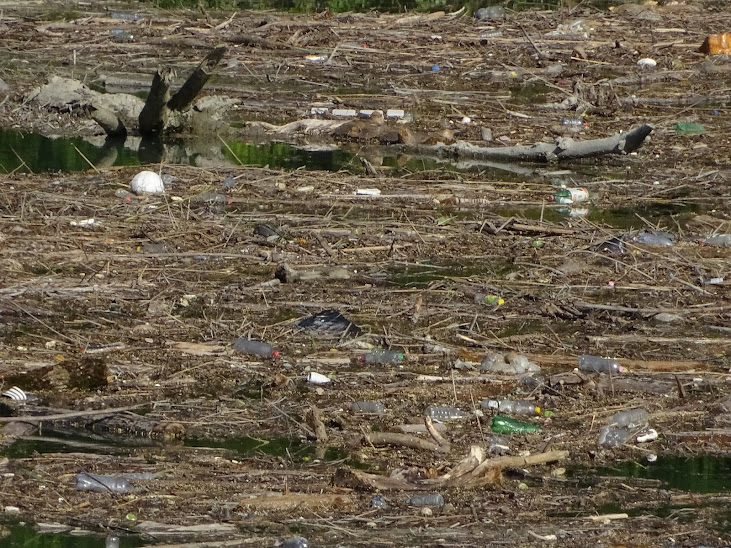
Driving home later on in the day we stopped by the side of the Rhone at the hyrdo-electric dam at Génissiat on the Rhone. The most impressive thing to see however was the stunning level of pollution in the water. In 1949 this was the most powerful hydro-electric dam in Europe.


Further down the Rhone we found a widening where there was a port for pleasure boats and a small and friendly café still open and selling excellent coffee – the “Lac du Lit au Roi”. Thankfully most of the obvious pollution seems to have been backed up by the dam and this place was charming and clean in appearance.

Saturday, August 16, 2014

Le Tour de l’Ain–Craft Challenge Cyclo

Pre-Race

Bad weather continued this month – even for this key “August 15th” French holiday weekend. The professional Tour de l’Ain is quite a big event now and attracts all the top World Tour teams. It seems that a short 4 day event at this time of year is quite useful for bridging between the big “Grand Tours”.  Ain is a river that joins the Rhone not far downstream and it is the name of the “department” – like “Isère”. It’s a place that is easily missed as people scoot south to the Alps but it has some excellent cross country skiing and ski touring in the winter and is peppered with small downhill ski resorts. Despite the great beauty of the valleys this area is heavily overshadowed by industrialisation, aggressive Islamisation, pollution, general degradation and serious poverty. The overriding memory however was of meeting extremely joyful and friendly people. The actual race was excellent and a real privilege to participate in. The entry fee of 15 euros is a complete give away and a breath of fresh air considering how the Tour de France severely exploits people for it’s vastly over subscribed “Etape du Tour” with 13 thousand people each paying about 90€. In contrast we numbered only 200 including the riders who were involved in the entire 4 stages. Actually, it’s is little bit scary knowing there are only 200 and you will be covering 140km over mountainous terrain. The potential for doing a complete solo trip is pretty high. The pros numbered just under 100 for their afternoon race (ours started at 9am) – so there wasn’t a great difference in numbers but in our group the ability to remain protected and helped within a peloton was not as certain by a long way.

Leaving Savoie on Friday afternoon to head for Ain we were confronted with torrential, cold rain. Later, talking to one of the top cyclists in stage 3 that day, he said it was the worst day of his life ever on a bike! We ourselves were heading for a campsite so that was a slight worry but the weather forecast was for it to clear. I use the “WeatherPro” app (basic purchased version) on my tablet and telephone and it’s amazingly good – with radar tracking of clouds and satellite cloud tracking – so we were fairly confident that it would be fine – and it did clear up as we were en route. The real worry was that on Google maps satellite images the campsite in Nantua looked like a dump in the middle of an industrial zone surrounded by ghettoes. In effect it was all of those things – except that after going through the gate it was like a complete transformation into a peaceful, calm and protected natural and green haven. The couple running the campsite were bright and creative artists, spotlessly clean and attentive to detail. This made the stay a real pleasure – sleeping in fresh air to the sound of distant animals through the night – in particular a pair of owls who decided to hoot to each other until daybreak. Natural noises like that are more comforting than disturbing – in comparison with machinery and road noise – which is just about everywhere these days. In addition I absolutely hate hotels – they are vastly overrated nonsense to be avoided if at all possible.

The building for registering for the race was only a few hundred yards from the campsite so around 7:20 am I was there to register. Having gone to bed early – as is the way in campsites with lights out at 10 pm. I had already been up before 7 am and cooked a breakfast of porridge, banana and coconut oil so that I’d have a couple of hours to digest it all before the race. I made a big pot of coffee and filled a travel mug to take to the registration. Christiane remained in bed during all of this – but was up when I returned from registration in time for the campsite café opening where she could get a much better coffee and a really good croissant. Christiane invited me for a coffee and it was a mistake accepting because I still had to prepare for the race and this left me running a bit short of time. In the event all worked out well and I was lined up at the start with about 10 minutes to spare. Knowing the course was over 140km doing a warm up seemed pointless as it would only add to the inevitable tiredness later on in day.

Race

The first 7 km of the race was neutralised and controlled by a security car and motorbikes until we were well past the lake at Nantua and out into the countryside – where a panel displaying “KM 0” was positioned. The timed race itself was over 133 km so this first 7 km turned out to be an excellent warm up anyway. During this warm up I suddenly realised that my distraction with Christiane during preparation had caused a slight problem – I’d completely forgotten to put water into the water bottles! Turning to Chris Harrop who was beside me I said ‘Chris, I have to ask a REALL BIG favour of you!”. Chris gave me one of his full bottles in exchange for one of my empties. It was a lifesaver for me but could potentially seriously screw up his race. If you are in a peloton then you really can’t stop to pick up water during the race or you get completely dumped! I was sorry to have put Chris in this situation but unfortunately had no choice. If he had refused I wouldn’t have held it against him – it was my stupidity after all.

Shortly after the official start we began the first proper climb of the day and this separated out the different levels immediately. I saw Chris pushing hard to get into the first peloton and I settled into the second which was also going pretty hard. For the next couple of hours of climbing and descending I remained hovering around two or three of the same cyclists. They impressed me with their strength and it felt weird being able to stay with them. It was clear to me that I was punching well above my weight here but I decided that as long as it was working I’d make the most of it. What surprised me most was simply being able to stay with the people when climbing. When I was a little heavier (a lot heavier actually) I’d just be going backwards on those climbs relative to those guys. Staying with those guys and being in the fight was a very good feeling. Some guys would lose it on the climbs and then battle to catch up on the descents – each making best use of his strengths. Most often I found myself beside an extremely athletic looking young guy with a solid square and muscular build – no 2038 – and wondered how the heck I was keeping up with him.

Everything was going well until KM 69. Ironically my race number was 2069 – so this may have been programmed! We arrived at a 3 km climb and by this time our ever accelerating peloton had amassed at least 30 people. The problem was that it didn’t stop accelerating on this climb. By the top the peloton had completely exploded into pieces – and I in particular was spat out of the bottom. My energy levels were fine, it was just that the legs were starting to “ping” and “twang” feeling one step away from cramping. The legs had reached their limit. I actually couldn’t increase power in them when I wanted to. The energy and motivation were both still intact and the legs didn’t even feel tired – they just couldn’t mechanically handle it. This is purely and simply the result of undertraining and not enough mileage in the legs. In July I’d barely reached 500 km total due to awful weather and circumstances. On the positive side I did manage to grab a water bottle (bidon) on the fly that someone was holding out. I don’t know if it was intended for me but I grabbed it anyway. After emptying it into my own empty bottle I stuffed it into a back pocket to return at the end – but it popped out somewhere along the road. I was hoping that Chris had the same luck with water. In fact I’d missed the first “ravitaillement” completely so without Chris’s help I’d have been out of water until KM 70. While occupying myself with the water the few other remaining stragglers from the exploded peloton managed to from a small group ahead of me and pull away – soon to be out of sight. I was not interested in chasing them as I understood that the legs were already in the red zone. Interestingly the three guys that were dropped along with me were all about the same age as me too – so that probably played a big part in it. The younger guys probably had a bit more reserve whether properly trained or not.

The next 40km ended up being a solo time trial. Our peloton had been so fast – averaging over 30 kph for over 2 hours with considerable climbing involved – that there was nobody for miles behind me that I could even consider waiting for to team up with.  For example – the winner of the pro race was predicted to average 38 kph – so for a bunch of ragtaggle complete amateurs that speed was pretty good. The moment I was on my own I could feel the loss of speed but not a loss of energy and effort. It was necessary to pace myself just slightly under the level I’d been operating at but in reality I was probably working just as hard and my heart rate graphs proved that in the end – sitting on average around 152 bpm – which is my normal training level. My feedback was coming every kilometre through an earphone in my left ear connected to my telephone, running GPS and the “Runtastic” app, along with Ant+ heart rate monitoring thanks to Sony technology in my trusty Xperia Arc. What surprised me was the kilometre times on the climbs were not dropping by more than a few seconds – which was very encouraging. When you are isolated it’s easy to become detached from the entire process but the audio feedback is a great point of reference – a bit like having your own coach in a car behind you urging you on. Only one guy caught me from behind about 500m from the end of a big climb and very frustratingly I couldn’t respond to stay with him without risking too much. During the entire 40km time trail this was the only person to overtake me. Once again I watched him progressively disappear into the distance. On the next climb when near the summit I spotted another two guys closing up on me – but I got the the top before them and when the caught up on the descent I was able to speed up and get in behind to draft and let the legs recover a bit. There was a long descent and this gave a good break and time for proper recovery – especially as I could easily stay with them without pedalling. During the descent I lowered my heels to stretch the calf muscles as much as possible. Stretching is a great protection from cramping – if you can manage to do it. There were still two of the biggest climbs of the day to come so I didn’t expect to stay with those guys. in addition they were both participating in the whole 4 days tour so they were confidently strong.


Surprisingly, right from the start of the first of the two climbs I took the lead and  ended up pulling the two other guys the entire way up the climb. My legs had completely recovered and were back in fighting mode even though we’d been going for almost 4 hours by now. It was extremely hard mentally holding that pace right to the top of the hill – but then I repeated the same exploit on the next and final hill too – the biggest climb of the day! On that last hill we caught up with and overtook two of the guys who had dumped me from the peloton that had exploded earlier on. They had both completely cracked by now. One was the guy who I’d almost held on with during the explosion and the other was a young guy I didn’t expect to see again. They were now dropped in turn. Just after passing the summit another guy caught us from behind – he too was participating in the 4 day tour. Now I was with 3 guys who were fighting for overall placing in the tour – so they meant business. This new guy put on the pressure so that my heart rate was the same during the descent as it was in the climb and with only 10 km to go there was now no letting up – with constant pace changing and sprinting to stay together. Coming up to the finishing straight I knew the game that would be played out. My concern was to get the best overall time that I could but their concern was position in the competition. I decided to keep the pace up and lead them in. Sure enough about 300m from the end they all sprinted past me flat out. The funny thing was that when I stepped on the power – just intending to stay together with them – the legs went straight back into “empty” mode and wouldn’t function. It felt like operating a set of bones with broken elastic bands. I found that amusing more than anything else – and disturbing considering that the others managed to vanish completely from sight in such a short space of time. How I managed to pace them up those hills and then for this to happen I really don’t understand.

The time from “KM 0” was 4 hrs 37 mins. This was about an hour slower than Mark Cavendish would manage in the afternoon – so pretty satisfying from my point of view as a seriously undertrained amateur more than twice his age. Unfortunately the cyclo results have not been published anywhere yet so nobody knows where he came in the race. (I say “he” because there was not a single woman participant.)

During the week building up to the race I’d been on an almost complete ketogenic diet – with almost no carbohydrates at all. This had been an experiment and was extremely interesting. On the Friday I cut out the intermittent fasting and started carb back-loading  - because I wasn’t confident about performing in a ketogenic state. It takes a body three weeks to become properly keto-adapted so there was no way I was ready for a competition without the use of carbs. The advantage here however is based on the “train low – race high” theory – of depriving yourself of carbs in training and then carb loading even more strongly as a consequence of this for the actual competition. There is still a lot to learn about the ketosis state but it feels very good as the body starts to adapt to it – so from now on that will be my objective – at least as an experiment. Carbs can be supplemented for competitions without destroying the ketogenic state once it is properly established – so it’s not a all back or white. You can create a “carb debt” and then eat carbs to compensate afterwards without ever leaving a keto-adapted fat burning metabolic state.

After the race Chris had to be driven back to Nantua to collect his car (22 km from the finish) and when back at the campsite I had a shower and change. Unfortunately on the return journey back to  finish I was too late and the motorway closed and trapped everyone on it as the pro peleton went through town – so I missed seeing the finish. One consolation was that at the only commercial stand at the finish line – an Ekoi stand- I was able to pick up a newer and more modern helmet for only 35 euros – so that was a nice compensation. Most importantly I had really enjoyed the race  - especially the first 70 km where our peloton was marshalled by a security car and motorbikes and ambulances the whole way – literally clearing the road in front of us. The last part also turned into an exciting battle and once again earned us a motorbike escort and support – with an ambulance following us across the finish line.

I spoiled myself after the race with a well cooked “hamburger maison” and chips in a restaurant and loved it! Sometimes diets need to be forgotten!


Sunday, August 10, 2014

Beaufort–Col du Pré

Today was supposed to be an orgainsed event at Bourg St Maurice. However some were setting off at 7:30am and not paying for the meal – and others would set off at 9am and the route would be nothing more than a collection of my normal inter-season mid-altitude plodding paths. Finding it impossible to get motivated for that I chose to do my own thing and head off for a solo 120km ride around Beaufort – taking in the Col du Pré and the Cormet de Roselend. In the course of events it was a late start because the evening before I’d gone out late for a 10km run and needed to use the morning and a good lunch for recovery. Night time would be already upon us by 9pm so I mounted some mini high brightness LED lights – which are also useful for going through long tunnels – just in case.

This was a great decision as the roads were almost empty, at altitude there was no wind and the setting sun was stunning – it was absolutely gorgeous. It’s what living is all about – screw the office job and wage slavery!

Sometimes it’s important to have the time to stop and take photos or just take a break in a mountain top café for a drink – with no pressure or distraction from others.

Exercising itself was tough because I didn’t have a lot of energy. Perhaps it took a while to digest the pasta and veg (with coconut oil for ketones) lunch, but it proved difficult to raise my heart rate to a performance level. This was the first time out on the bike since Tuesday’s big ride – since when I’d managed a 6hr mountain hike, 36 hour fast and a 10k run. Normally the next ride on the bike after a big ride turns out to be a “recovery” ride – whether it’s the day immediately after or several days later. This felt like a recovery ride but it was impossible to really say why. What was interesting is that my functional heart rate did progressively rise so that it was correct by the time of approaching the top of the steep Col du Pré. The col is impressive because it has several kilometres averaging 11% gradient – so it’s tough with normal gearing!

I stopped briefly in the centre of Beaufort, expecting to have to change the battery in my phone/sports app device. Surprisingly the battery was fine and so I just had a Coke and filled the water bottle in preparation for the climb up to the Col du Pré. Sitting on the terrace enjoying the break and the iced Coke in the heat of the sun it was hard to not be disturbed by the incongruity of the tables surrounding me – all filled with bikers and biker families in their leathers – and all puffing away at their stupid cigarettes  – parents and offspring alike – without exception – as they slavishly do all day and every day of their lives. Horrible!

Escaping from the mechanised idiots I was promptly back on the bike riding up through Les Areches village – which was closed for a special 50th year festival of some sort. The gendarmes however let me dismount and walk though the town to start the climb at the other side. before climbing in the heat I topped up my bottle at an old fashioned water stand that uses a mechanical wind up handle. One of the little local kids offered to turn the handle for me – cute!

With the town being closed the road up to the col was empty. It was like being in heaven! Right at the top of the col, overlooking the Roselend dam I discovered La Pierra Menta  café/restaurant, also overlooking the famous Pierra Menta peak. This would be my final extended pit stop for the day. There would be another stop at a watering point just before starting the climb up to the Cormet de Roselend – but here at the café I’d consume another Coke – if for no other reason than to have a break and chill out. The temperature was better here at 1750m altitude – although wind had kept me cool enough lower down where it was between 25°C and 30°C. 


La Pierra Menta (famous for its winter ski touring competition)

My legs had been throbbing by the top of the Col du Pré so the café break was a useful recovery. I was eating some dried dates and consuming some sugar mix along the way – but using only a minimal amount to keep brain fog and headaches at bay. Fortunately headaches caused by low energy supply to the brain are rapidly remedied by eating glucose – so you can more or less wait for the first signs and then use it as a signal to eat a bit more. From the café there is a descent down to the dam and then it’s necessary to cross the dam and cycle around the lake before starting the climb up to the Cormet de Roselend. The climb up to the Cormet was very easy in comparison with a setting sun still providing body warmth even at 2000m altitude.


Timing was spot on as light was just starting to disappear when arriving at home. The small LEDs were perfect for making the bike visible and there was still ample light for seeing the road. 15 minutes after arriving it would be dark! My energy levels continued to improve right up to the 5hr 25min (not counting stops) and 119km end – despite eating very little and having missed the evening meal. The descent from the Cormet was excellent as the wind was from behind and the roads were completely empty. The dry hairpin bends are real fun and you can play with dynamics, trying to nail the bends with maximum speed and g-forces, without worrying about skidding and falling. Needless to say there is no gravel there either.

After the hard ride my appetite – as usual – was curbed. The body goes into a post exercise ketogenic state – where it metabolises fat and produces ketones for energy and feeding the brain. It’s true that if you want to replace the glycogen (glucose crystals) in your muscle and liver stores then you are best to eat within an hour of exercise – but the big problem with this is that it completely shuts down fat metabolism. I decided at this point not to eat and to go straight into my weekly 36 hour fast – despite having just burned about 5000 calories in exercise. There is a slight risk here that the body might steal protein from the muscles to metabolise and produce glucose – but with the fat metabolism already running there is also a good chance that more fat will be burned. I would really like to lose a few more kilos just now – so weight loss is priority. I have heard in the past that a good way to lose weight is to “not eat” after a workout. Of course this is never properly explained. When you understand the logic then there is more motivation to carry out such a dietary restriction. 12 weeks of fasting exercises also removes the fear and apprehension of not eating. Endurance sport itself appears to have boosted my fat metabolism anyway as performance has improved – so there should be no issues with “bonking” during the 36 hours of fasting. Whether or not I can manage to go for a run during this period remains to be seen. Any exercise will be slow – at “fat burning” pace due to reduced energy availability. Apparently the training effect of a workout is every bit as powerful when on reduced energy as when going flat out on a high carb workout! When the body is fully keto-adapted apparently the “fat burning” pace is as high as the carbohydrate performance pace – so the “fat burning” label needs to be used very carefully. In effect “fat burning” is a pace which uses the highest absolute number of grams per hour of fat in metabolism – which is different for someone using carbs and someone who is keto- adapted. I’m not keto-adapted!

Chi Running – evolution

The previous evening’s run had been interesting. Having just come off a 36 hour fast (later in the week than usual due to competition and other events) there was no way to get up to full power – so it was a good time to work on technique and efficiency. There were two key issues that really stood out. First of all the efficiency of raising the heels the get the lower leg properly horizontal for the recovery – it makes a massive difference to the reduction in energy required to pull the leg forwards. Secondly there was a new sensation. Normally running is a matter of “pushing” to try to advance the body. Of course this is a massive screw-up as the propulsion should come from  gravity (deflected) – but even knowing this it’s mighty hard to avoid the temptation to actively push. On this occasion I really felt that acceleration and speed came from driving the thigh forwards – and not at all from pushing. When coordinated with the falling forwards of the body I noticed that instead of the driving forwards of the thigh causing a breaking effect (equal and opposite forces) – the power from the forwards drive went into the leg that was extending behind. The power was not coming from that support leg – it was coming from the recovering leg and core (abdomen/ mid-section) and upper body (arms).

For speed – there is a cadence and rhythm that must be met – about 90 strides per minute – to ensure an energetic/elastic  rebound and “freewheeling” sensation. Running downhill for a moment can help to connect with the sensation – but it isn’t about speed it’s about cadence. Oddly however, when just focussing on cadence alone it’s easy to miss the effect!

Thursday, August 7, 2014

Champagny Hike

Tignes Glacier seen from above Champagny le Haut.


Tignes with the Grande Casse to the right.


The Grande Casse glacier (main glacier is on the other side)


Moraine at the bottom of the Grande Casse


View in the opposite direction – down the valley – looking directly onto Courchevel and the next two valleys are Meribel and Les Menuire.


The Three valleys!


Christiane reaching the top of our ridge crossing.

Tuesday, August 5, 2014

Chartreuse

Today was primarily a “day out” on the bike  – the first time this year cycling on new roads that I’d never seen before. The trip would cover both mountainous sides of the valley leading from Chambery to Grenoble – with the main (hard) part being on the West side – the Chartreuse Massif. This would mean finding an apparently invisible road up a vertical 3000ft wall. I think I’d driven up that road in 1993 and went mountain biking once up at the top – but got lost and miserable. There was no public GPS in those days and I remember it was misty with low cloud. The bike was  a useless Marin steel mountain bike from close to the first generation – with no suspension and weighing half a ton – which was still considered pretty good in those days. Those bikes were not cut out for real mountains, being perfect only for trails in reality. I gave it away to a friend in Les Arcs eventually – but he only used it once and seriously hurt his nuts so never used it again. Hint! – never give a bike away because you will always regret it eventually! I’d cycled across the whole of the Pyrenees from West to East on that bike so it’s sad to think it is not appreciated now – however technology moves on and today’s technology is one whole lot better and far more reliable.

Leading our group was Chris – who had ridden the route last year – the route being planned by a local French cyclist named Richard. (Route can be seen here in full: http://www.openrunner.com/?id=3928653 ) i downloaded the planned route from openrunner.com and uploaded it into runtastic.com online so it became a selectable route on my Runtastic (Road Bike Pro) telephone app. It was the first time I’d actually used a mapped “route” with Road Bike Pro so that in itself would be interesting – to see if it actually helped with route finding etc. Lesley and Rob were the other two cyclists and like me were not accustomed to such distances or such big accumulated ascent totals in training this year (147km and 3600m climbing on this route).

The photo of Chris, Lesley and Rob has the Chartreuse Massif in the background. This striking geological feature extends all the way from Grenoble to Chambery. At the Chambery end it was the source of one of the worst disasters in the middle ages when a partial collapse killed between 1000 and 2000 people. Mount Granier collapsed near midnight, on November 24th, 1248 and the debris covered an area of approximately 20km sq – the rockslide being 7km long with maximal width 6.5km.

Central Fatigue

This was only a training ride so stops and photos would be possible. The racing mentality has the unfortunate side effect that you don’t really notice anything other than your intense effort. At least today we would be able to take some time out to enjoy the new surroundings. None of that would lessen the intensity overall however – and Rob was unfortunately soon to become a victim of that fact.

Myself, Chris and Lesley were all using a sugar mix of 2:1 maltodextrin to fructose – but Rob wasn’t! Following shortly after the climb up to the Chartreuse Rob bonked. Oddly, this hit him on the descent which although tricky and largely on a single track road, shouldn’t have been the point at which he slumped. “Central fatigue” is the technical name for bonking and it’s when the brain is not receiving enough fuel to function properly. Rob ended up stopping and laying his bike down – but only after dismounting with difficulty, putting his hand on the ground to help. he then lay flat for 15 minutes and eventually crawled on all fours to a river to get some more water. This is the difference between those with a nutritional plan and someone without one.  The fact is that “superstarch” or “maltodextrin” when used along with fructose, keeps Central Fatigue at bay regardless of the intensity and duration of exercise. Other fitness issues will be exposed but bonking won’t happen.

Meanwhile, we were all waiting near the bottom of the descent wondering what had become of Rob. I was sure he had a puncture or something. When Rob did turn up we were all out of water but fortunately only a few hundred metres further on there was a public water supply in a small village – and nearby there was a restaurant open so happily we all agreed to have lunch – and all plumped for the “plât du jour”. This is SO much more enjoyable than racing!  OK, it’s different – racing is also very enjoyable.

It was slightly chilly during the descent though we all had windbreakers to wear. Rob ended up shivering and shaking all through his meal – but this was clearly coming from the Central Fatigue. We still had a good 1000m of climbing to do and about 70km to cover so I was a bit concerned about how he would cope.
Each person was effectively climbing at his/her own rate and then we would meet at the top of each climb. The climb up to the Chartreuse that destroyed Rob was quite impressive with very long stretches of over 11% gradient, long dark and wet tunnels and finishing up at the top with the “Col du Coq” – a word play in English which clearly amused Chris. No doubt the rest of us were having slight humour failures by this point as basic survival was probably more important. Chris – shepherding everyone, was no doubt staying well within his limits.

Two more cols would have to be climbed before our final descent into the valley near Chambery – the Col de Couzon and the Col de Granier. Couzon was steep but only about 4km. Granier was not so steep but it went on for about 8km. Granier is quite a famous climb but that must be from the other side – which is really steep and goes all the way to the valley floor.  The best part was that at the top of the Granier there is a big café so we had our final rest stop of the day and could prepare for the descent and then the 35km hike along the valley floor back to the cars. Rob had impressively recovered and was back performing every bit as well as he was before bonking. That was interesting to observe.

The important thing to know about Central Fatigue is that there are two ways of preventing it. You can either load up with carbs before a workout and then supplement with appropriate carbs during the session – or go the other way and train the body to burn fat very much more effectively through either fasting or eliminating carbs and most protein from the diet. The jury is still out on the question of which is best as very little research has been done on the second option – the “ketogenic” state.

In my own case I’d supplemented on this day with ketones consumed directly in the form of coconut oil – and had been loading up with carbs pre-workout – plus using the maltodextrin/fructose supplement during the session. For about three months I’ve also been using one or two day weekly fasts and more recently daily intermittent fasting – to get the body better adapted to ketone use. The body, being subjected to post exercise ketosis, fasting ketosis and also training while low on glycogen  - plus eating ketones directly – tends towards using fat more efficiently as an energy source when exercising – hence sparing the glycogen in the system. On this day I’d only taken enough sugar for two hours supplement at 90g/hr – and instead spread this out over 6hrs 33 mins. The large meal in the middle no doubt helped though as I finished the day feeling stronger than when starting out.

Altogether it was a great day on the bike. From now on I’ll be making up new routes myself and getting out there. The Road Bike Pro app worked perfectly and the map really helped with navigation – until the battery ran out. I need a new battery – but as the app allows a power down and then picks up again from were it left off I can change batteries during a long day if carrying a spare. Recently I bought an “original” Sony battery from the internet but it was a con – obviously being original – but used and useless! Cheap Chinese batteries are also a false economy as they too come from recycled dead batteries and they are very poor quality. Don’t buy Chinese unless you enjoy being ripped off. Next battery will unfortunately be an expensive but new Sony original.

Monday, August 4, 2014

La Bourgui 2014

Electrical Storm – Torrential Rain

Aime – recovering from the torrential rain.

The evening before La Bourgui 2014 race there was a spectacular electrical storm with bolts of lightning striking at much lower altitudes than usual. Driving home on a dual carriageway when climbing a hill my car managed to aquaplane half way round a corner before coming back under control. Luckily it happened when climbing and not descending. The problem was this was forecast to continue until late the following afternoon and racing bikes are not guaranteed to stay upright in anything approaching those conditions – even with my high carbon “nanotech” Continental tyres. The start of the race would even be downhill from a ski resort.

Sure enough the torrential rain continued during the night and at 6am was not letting up. Having registered and paid for the race I decided to go anyway and then make a last minute decision about bailing out at the race start. Driving uphill to St Martin de Belleville where the race would begin, just down from les Menuires ski resort, there was dense cloud to drive through and curtains of rain that were severe even for a car. The one saving grace was that the air temperature wasn’t too low – and that changes everything.

Preparations with the bike and clothing had been completed the nigh before. There’s a million and one things to consider when preparing and any one overlooked item can be a source of real trouble. Cleaning and oiling the bike is important – then leaving out the pump to remember to bring the tyres up to pressure before setting off. Making up the food supplements for the race takes time and getting everything laid out for a fast, efficient early morning breakfast and departure takes hours of organisation.

Driving up to the start there were no other cars going up the mountain and I wondered (or hoped) if the race had maybe even been cancelled.  Arriving at St Martin de Belleville however it was all go with the race security cars and motorcyclists, ambulances and organisers as busy as ever. I registered for the race and went inside for a pre-race coffee (and toilet) still not having made a definitive decision. Despite the rain still falling there was a momentum building up about the race and bailing out felt less and less likely. The long descent to Moutiers would be very risky and the participants would be reduced to only a few real diehards – but this is a race only for diehards anyway – tourists being conspicuously absent every year even if the sun is shining. At best it’s a brutal race from start to finish.

Pre-race Fatigue

Right from the start of the race my legs didn’t feel right. At first I thought it was just due to not warming up properly, exacerbated by the cold rain against the legs. In reality the legs hadn’t fully recovered from Thursday’s very hard workout and Firday’s 12.5km run. The week before that I never got out on the bike at all and although there were a couple of running sessions this doesn’t maintain cycling fitness. July on the whole had been a wash out with rain storms and waves of cold air so that up until Thursday I’d only managed around 400km total during the month – with most outings being short hill climbs of no more than 90 minutes. Thursday’s attempt to catch up on lost time was not ideal preparation for Sunday’s race – but this was anticipated. Priority was never just for this race – it was to get out on the bike when conditions permitted. The racing is for fun and motivation.

How do I know the real limit was cause by fatigue? Well, in addition to subjective feeling the give-away indicator was the heart rate – simply being unable to sustain the high levels that I know can be sustained. When the heart rate doesn’t climb to it’s expected level then this either indicates illness or fatigue. Despite feeling an apparent dip in performance in the middle 10km of the last climb there was no genuine energy loss. On reflection even the dip in performance was only fatigue induced because as soon as the gradient eased off a little the heart rate went back up to the same level as it was 3 hours earlier.

The Race

Start – Wet Descent

Participation level was low with only about 67 on the short course. There is a short climb at the start before the long wet descent to Moutiers and my legs had no response to people overtaking me even here. Saturday had been a full rest day but recovery was clearly not complete. It wasn’t as if the legs were dead – they were good – but just not 100%. My main adversary for the day would be Jacques Matt. Jacques had beaten me by 2 minutes on the Time/Mégève and I’d beaten him by 6 minutes on the JPP so today’s battle would be interesting. Jacques overtook me on the climb – which is unusual because he normally climbs relatively slowly early in a race. Responding to this I was able to muster up the effort to regain the lead from him before the top of the climb. The descent to Moutiers is punctuated with several faux-plat climbs – not being a direct or simple descent. This guarantees a fight right from the start as people need to slipstream or risk being dropped early on. Jacques was wearing a black bin bag with holes torn for his head and arms – to be torn off and discarded at the bottom of the climb.

Everyone was worried about the water on the road and the likelihood of falling. The trouble was that the descent was a good 20km so a lot of time could be lost. I pushed on past the over-cautious and thought that this would be a good pace until I heard a roaring noise as Jacques flew by about twice as fast with his bin bag thundering in the wind. Naturally, caution went out of the window at that point as I had to make sure not to let him get away. On the next climb I caught up with Jacques and then dropped him after a short sprint to catch a faster guy to draft behind. From this point on Jacques was history – or so I hoped.

The steep technical descent into Moutiers was a battle to avoid getting dropped. My descending skills are relatively strong so that helped a lot – choosing good lines and keeping the bike as upright as possible gains a lot of time on the hairpins – and keeping the arms tucked well in makes freewheeling much faster.

The Hills and Flats

Climbing out of Moutiers it was clear I didn’t have the strength to stay with the guys I’d hooked up with on the descent. However after losing them for a while someone else caught me up and then by sharing the work and rotating the drafting we rapidly caught up again on the flatter ground. I was clearly struggling to keep up speed on any gradients though – regardless of recent weight loss or better nutrition. When we hit the first proper climb – part way up to Naves – a small cross country ski station – I just let the faster guys go. I knew there were people behind but only a few caught me up and there was no sign of Jacques. The guy I previously worked with (in a red jersey) eventually stopped pulling ahead and kept a steady gap of about 100m. He was then joined by race no 96 who had also overtaken me. Interestingly 96 had a really slow cadence and Red a really fast one – which was odd to watch as they climbed side by side. My cadence was in the middle.

Descending back down to the valley floor would be on a very narrow sketchy track – which is the only place I managed any sort of skid during the day. The road was a bit steeper than the main road, with gravel and tighter hairpin bends. Skidding in a straight line is not a problem – it’s something that every kid practices while destroying their rear tyres. The only snag here is that in France the rear brake is on the right – whereas British kids grow up with the rear brake on the left – so there is always a potential confusion possible.

Getting to the long flats I knew that it was important to catch the other two for drafting as we were now on a stretch of 35km where getting isolated would be a disaster. Despite the other two properly drafting in rotation I was able to catch up before the next short climb. Being really familiar with this particular climb I was able to pace it better than either of them and get in front by the top. A couple of others then soon appeared from behind – but eventually they were too strong. About 5km further on I was caught out by a short hill which the others had anticipated better. My legs had been tired from pulling in front and they all accelerated to get momentum up the hill – so I was dropped and it was impossible to get back – a clear mistake on my part! All was not lost however because 96 had made the same error and so we ended up for the next 20km or so having to share the work and helping each other. 96 would start off up each hill faster than me but I was always able to get back together by the top – until the final steep slope coming into Moutiers. After dropping me 96 then kept looking back and slowed down slightly to let me catch up as there was still a fair stretch to go before the start of the final climb.

Arriving at Moutiers the roundabout was confusing as there was no clear direction sign and the person stationed there made no effort to signal. 96 almost went off in the wrong direction so I had to shout to warn him. Earlier on Chris Harrop had almost fallen here on the white road paint as his front wheel slipped a little. Martin Rowe further behind was not so lucky and landed on his hip and head when his front wheel went from beneath him.

The Final 20km Climb

When we started the final climb back up to Les Menuires I just let 96 go ahead because he was obviously stronger and drafting wasn’t needed now. There was someone at the roadside with a stopwatch who called out the time ahead of the leaders – only 23 minutes! The first 60 km had been covered in 2hrs exactly – 30kph average. That’s a speed that would destroy me regardless of the condition I was in – and I was not to be disappointed. Looking down the road as the climb began the next group was about half a kilometre behind and I wondered how long it would be before they all came past me. I felt sure that Jacques would be in that group.

For a while I managed to climb in 3rd and 2nd gears and keep up a reasonable pace – which was quite encouraging. Either the road then steepened or I got tired because before long I was in first gear and looking for a lower one that wasn’t there. About 5km up the climb and I saw the Maçot club red and yellow jersey of Jacques, minus the bin bag, approaching and knew that he was going to easily devour me. Jacques went past at a significantly better pace. I still felt fine and wasn’t running short of energy – just strength. All I had to do was use low gears and there were no issues of sustaining the effort – but there was just no force in the legs or speed up  the hill. The middle 10km of the climb was a bit grim – but not as black as I’ve known this section in the past. Stopping for water at St Martin de Belleville I was even able to joke with the helpers – so mentally and physically there was not the deep low that can be experienced at this point. Only a kilometre further on and the road would widen and level off a bit. When the gradient reduced to around 5% I was able to work properly again and get my heart rate back up to over 150 bpm consistently – which again shows that there was a fitness/strength/fatigue issue and not and energy issue at root.

Two kilometres from the end there is a slight dip downhill before a steepening of the gradient uphill. Last year when hitting this gradient both my legs went into violent cramps and forced me off the bike – so I was paying great attention to how my legs felt this time. Despite being on the edge during the whole race I’d paid attention to coordination and alignment – making sure to use the muscles, joints and leverage in an optimum pattern. The food supplements should also help with cramp issues – despite the obvious fatigue. Sure enough there were no signs of cramp and my small recovery from the doldrums continued with a progressive catching up of the guys who were visible ahead in the distance. About 2km from the top 96 passed me on his way back down the hill and 1km from the top Jacques passed by too – having finished about 8 minutes ahead.

In the end I was 7 minutes faster than last year (3hrs 44 mins) and had no cramps – not as good as I’d hoped for but not a complete disaster either.  Chris had been only 12 minutes ahead at the 60km mark but I lost another half an hour to him on the climb.

Despite fatigue I was able to hold a good level until the critical 7% gradient where power to weight ratio dominates in climbing. This makes it clear that I need to lose another 3 or 4 kilos to prevent this from happening. There were certainly no fatties ahead of me. Most of the skinny mutants who win those races do not look healthy at all – so I’ll be happy just to settle for the 3 or 4 kilos and a sensible time.

After the race I had to cycle about 8km down to St Martin de Belleville to get back to the car before getting cold. During the descent the sun started to appear. Rain had actually stopped after the early morning descent into Moutiers – but by then everyone was thoroughly soaked. I’d kept my waterproof on and never got too hot. I function better when feeling hot than when feeling cold. When I got to my car and put the key in the lock – it wouldn’t work. The lock was jammed (perhaps due to all the water) and this key only works in one lock. Not ideal when you are standing there cold, wet and tired! I had to break a rear side window to get in the car – not the first time! Peugeot lock systems are CRAP!

Chris took 2nd place in our age category (18th overall I think) and so won a pair of Look pedals – and that meant we had to hang around for four hours for the prize giving. That on it’s own wasn’t bad but the food after the race was really horrible. At least coffees were free.

I came 57th overall (out of 69+ )and 10th (out of at least 12) in age category.  I’ve never managed better in this race so there are no surprises there.


Chris on the podium – on the left “Maçot”

(first time ever in a cyclosportive! – though he won it last year he didn’t know and missed the podium that time – beating the guy who had top spot this year!)

Saturday, August 2, 2014

Training - Cormet de Roselend, Beaufort

Thursday 31 July

At last a day without rain! This July must be one of the wettest on record in the Alps – pity that wasn’t the case during the winter when excessive precipitation was desired.

Due to a combination of working on clearing weeds and trees last weekend and the bad weather I’ve managed – even in the month of July – to miss an entire week’s cycling. This session would be a long one of 115km to get back into it properly. It’s strangely hard to get back on the bike after a week off. In fact it’s disturbing how easily an exercise routine can be forgotten and quickly be relegated to the back of the mind.

Intermittent Fasting – Ultra Endurance Workout

Perhaps my main concern for today was that it would be the first “ultra endurance” (over 4 hours) workout since adopting a daily intermittent fasting program. Monday had been a full day without food spanning 36 hours and from Tuesday evening a daily fast of 12 hours was being employed – as it was all the previous week. This has noticeably reduced my cravings for sweet things and all foods in general. In effect it has modified my appetite. The concern is however that the nightly  - 8 pm to 8 am – fasting which empties the liver and muscles of glycogen (as it is intended to do) – might cause negative issues on a long workout.

So! What happened?

It was my best workout around this circuit for several years. Perhaps most of that outcome can be attributed to weight loss of course – but the last time going around there in June on the back of a full day’s fasting (separated by one full day of recovery) was the exact opposite, leaving me struggling badly for energy all the way – and that was without any intermittent fasting going on.

The intermittent fasting seems to have removed the tendency to be dependent on sugar, not just for appetite but for energy in general. Perhaps by cleaning out the glycogen every day – this encourages the fat burning system, in particular  “Ketosis” to function better. This was also week 11 of my whole day fasts so perhaps there has just been a general evolution or adaptation regardless of the intermittent fasting – but the appetite changes didn’t begin until daily intermittent fasting began.

Chi Cycling – Lower Back

The demanding physical work of clearing land at the weekend had left me with a very sensitive lower back. A few years ago cycling would have aggravated this into a problem but now it only helps. The key to this of course is the Chi Cycling coordination and I was looking forward to it as a therapy for the back. Yes, it worked! There was no backache on the bike and it helped the overall recovery markedly. I have had back surgery three times but left all that nonsense behind me over 25 years ago as I learned to deal with such complex “management” issues myself. In effect I’ve never missed a day’s work on the mountain in 25 years even through the harshest of winters. There is a permanently compressed sciatic nerve in my lower back – with blocked circulation of spinal fluid – but it acts a a sentinel which helps keep me alert and managing the back properly. Awareness levels necessary for managing such issues are hard won but invaluable – protecting the whole body and all the joints especially in the most demanding and extreme situations.

Ketone Supplement (Coconut Oil)

One new additional factor added to this day’s workout was supplementation with ketones – in the form of two tablespoons of pure organic coconut oil. The brain can use two fuel sources – glucose and ketones. Coconut oil is nature’s richest source of ketone’s – Medium Chain Triglycerides – and is around 50% lauric acid – with another three similar ketones (fatty acids). The idea of supplementing is to supply alternative fuel to the brain and muscles and produce a glucose sparing effect to make the sugar last longer. Bonking happens when the brain runs out of energy so this is potentially a tool for tricking the brain into holding off from shutting down the system – bonking – or “central fatigue” as it is more technically referred to.  In addition, when the body is trained for endurance events then fats are burned during effort in a higher proportion than for untrained people – maxing out at around 65%VO2max for trained athletes. Supplying additional ketones to supplement those that will be slowly produced from the body converting its own fat stores seems to make sense.

Having fasted all night the workout was delayed starting until mid afternoon so there would be time to backload a little on carbs. In this case lunch was rice and a massive nutritionally rich salad. The evening meal the day before had also been wholegrain organic rice with mixed beans and nuts. Added to the rice this lunchtime were two tablespoons of melted coconut oil. In addition to being rich in ketones the coconut oil is also very rich in vitamin E and antioxidants and the fatty acids are actually beneficial to the heart. “Virgin oil” – first cold pressing of fresh organically grown pulp – might be expensive but it’s incredibly pure and odourless (though I generally can’t smell much anyway).

Coconut oil (two spoonful's per day) is known to markedly improve brain function in those suffering from Alzheimer’s and is known to improve thyroid function – which is a key factor in metabolism. When overweight people supplement with coconut oil they are reported to specifically lose abdominal fat.

The oil also makes a perfect synthetic chemical free skin care cream and doesn’t break down in high temperature cooking. It’s definitely a seriously overlooked “superfood” – due to early misunderstandings that led people to mistakenly believe that it’s high saturated fat content was bed for heart disease.

The Workout – and Sugar and Amino Acid Supplements

Pre-workout I’d been a bit ill with a headache and explosive bowels so it was going to be slightly hard to know what symptoms to come would be from this or from the actual workout. I had also started to supplement correctly (twice per day) with specific amino acids to start building up levels in the body for the upcoming race on Sunday. (Citruline Malate, Arginine, Taurine plus Vitamin C and D-Ribose (riboflavin))

Climbing the Cormet de Roselend I was able to avoid dropping below 2nd gear despite wind in places. Until now this year first gear has been obligatory. The climb was physically strong and psychologically enjoyable the whole way.  Perhaps the week off from training contributed to this effect as accumulated tiredness levels would have definitely dropped. At the top I stopped for some photos with my new tiny Sony DSC WX350 20x optical zoom compact camera. It’s small and light enough to carry on a bike without feeling it at all. In fact a couple of times I panicked thinking it might not be in the pocket. The images look great and dramatic – but those posted here are post-edited with the great “Neutralhazer” filter added to Photoshop (Brought to my  attention by Paul Evans).

After the descent to Beaufort there was a bit of a headwind to work against all the way to Albertville. If anything the mildly headachy feeling from before the workout was clearing – but pushing against the wind seemed a bit uncomfortable. It’s the only point during the session where I felt a bit under par.

The rest of the workout felt fine with highs and lows of energy at unexpected moments. That’s usually a sign of things going well. I stopped for water at three public water spouts along the way – just carrying one bottle on the bike. Along with the water I had 180 grams (dry weight) of sugar mix – 2 maltodextrin to 1 Fructose, with multi-vitamin-mineral, L-taurine, D-ribose, caffeine, sea salt and organic lemon juice. This is about 50% of what the body can process and use over a 4 hour period. I kept the sugar supply to 50% because this was not intended to be a workout at maximum intensity – due to the need to recover for the Bourgui race on Sunday.

From about the 80 km mark I was starting to get deep leg pains. This is the sort of hurt that has positive developmental effects in the long term – unlike cramp – which is simply debilitating. It was impossible to determine the real cause of the leg pain – Pushing higher gears? Low carbs due to intermittent fasting? Ketones masking low carbs? I suspect it was the use of higher gears. The final climbs from Moutiers to Aime were all carried out using the large 52T dual camber chain ring. Until now none of those climbs were possible using that chain ring – so bigger gears were definitely being used. At no point was there a serious energy or motivation dip.

On stopping at the end there was a deep leg ache for about half an hour – similar to how it often feels at the completion of a tough race. Recovery however was good – eating promptly after the workout and there was no trouble sleeping. Next day (Friday) I was able to run 12.5 km without feeling particularly tired – passing the 10 km mark comfortably in 55 mins.

Carbohydrate Loading

Eating immediately after the workout was an essential element for commencing carbohydrate loading for Sunday’s race. There is about a 30 to 60 minute window after a workout where eating can restock a maximum amount of sugars back into the muscles – and after that it’s too late. At least 3 days  are necessary for carbohydrate loading and in reality exercise should be being reduced by this point. Bad weather had not allowed this program to be strictly followed. Cycling over high altitude mountain passes in bad weather is not recommended – they were literally white with fresh snow a day or two earlier. On this day, with the sun out I was able to climb and descend with only a cycling jersey and no windbreaker. (Though I had one in a pocket just in case the sun disappeared behind clouds)

Carb loading has proven somewhat difficult as my appetite seems to have diminished with all of the fasting. I’m basically on a vegetarian (plant nutrition) program. Perhaps the one thing that’s kept me on track here is organic red grape juice – which is incredibly sweet and an effective natural way to carbohydrate load. Even just a few weeks ago this juice seemed like pure nectar and I could guzzle it by the gallon – along with dates and anything else sweet. Now all that sweetness is slightly repulsive. Saturday will have to be a massive wholegrain (épeautre) spaghetti day to make up for it all. From Thursday until Sunday the intermittent fasting has been stopped to allow for carbohydrate loading.

Ketosis Performance

I’m currently reading about the possibility of using chronic ketosis for enhancing athletic performance. This involves so-called “keto-adaptation” over a period of 3 to 4 weeks of either fasting or high fat, very low carbs diet. The science looks good but at some levels it seems to lack credibility. There is too close a relationship for my liking to the “Atkins” fad diets – which are clearly not nutritious. So far I’ve found no serious evidence of any successful elite athletes who perform in a genuine state of ketosis. Perhaps they use low carbs or fasting at some point and then either backload carbs before or even during competition – but nobody seems to race purely in a ketosis state. With this in mind my current intention is to remain on course with the use of intermittent and one day fasting along with carbohydrate backloading and supplementation – adding only ketone supplementation from coconut oil.